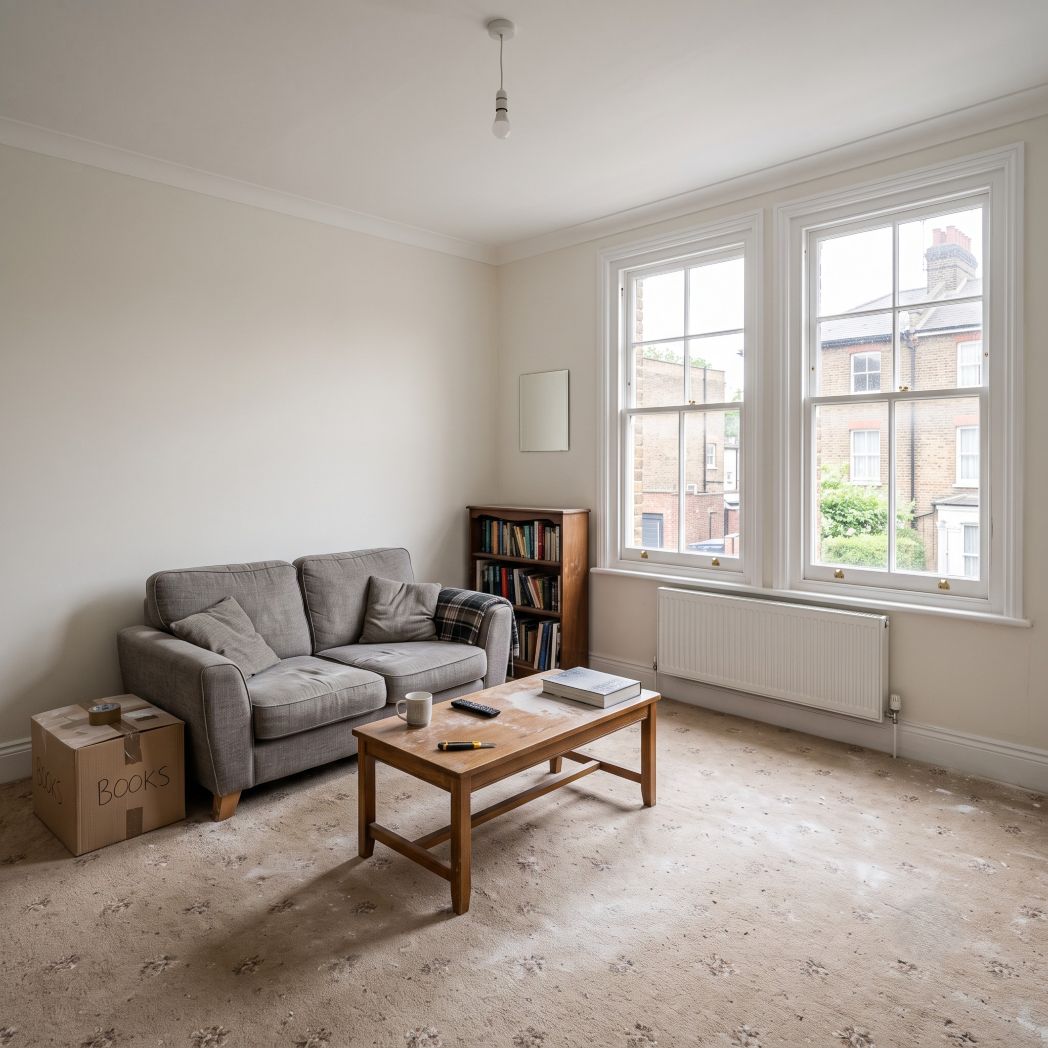
A wand-only clean on a filthy rental carpet is close to a con, and the trade knows it.
I say that as someone who runs a truckmount and believes hot water extraction is the best rinse mechanism available to us. The problem is what happens when extraction becomes the entire method rather than the last stage of one. Somewhere in the past fifteen years the line “we use professional hot water extraction, not rotary” turned into a marketing badge, and a generation of operators learned to walk into a four-bed HMO off Turnpike Lane with a wand, a bottle of pre-spray and no agitation tool of any kind. Then they wonder why the carpet looks grey again by the second viewing.
There is a reason the certification bodies teach agitation as a separate variable. It does work that heat and chemistry cannot do for it.
What does a wand do to soil that a rotary cannot?
A wand does two things. It delivers hot solution under pressure and it recovers that solution by vacuum. Both are valuable. Neither is mechanical action.
Cleaning has four inputs that trade against each other – chemical, heat, agitation and time. Drop one to zero and the others have to climb to compensate. Wand-only operators compensate with chemistry and volume, which is why so many end-of-tenancy jobs end up over-dosed and over-wet: more pre-spray, more passes, higher pressure, on the theory that flushing hard enough will substitute for physically breaking the bond between soil and fibre.
It will not, and the reason is where the soil sits. In a heavily used rental, the worst of the contamination has been ground into the lower third of the pile and into the primary backing by eighteen months of shoes. Solution sprayed onto the pile tips wets the top. Vacuum recovery pulls from the top. The bottom third of the yarn barely gets touched unless something physically flexes those fibres apart while the chemistry is live.
That is the entire case for agitation, and commercial contract cleaning has never argued about it. It has become controversial in domestic work because rotary got a bad name in the 1980s from shampoo residue, and the trade over-corrected.
Look in the tank. That is the test I would put to anyone who disagrees. Run a wand-only pass on a heavy soiled lounge in a let flat on Barking Road, E13, then agitate the identical carpet with a counter-rotating brush and run the wand again. The second recovery tank is darker. Every time, in every property, on every fibre type I have tried it on.
The trade-off nobody admits to
Agitation carries risk. A rotary pad spinning at 175rpm on a wool Wilton will fuzz it, and a stiff brush on a distressed loop will pull the loops proud. Those risks are real and they are the reason for the caution.
The dishonest move is pretending the risk runs one way. Skipping agitation on ground-in soil also damages carpet, slowly, by leaving abrasive grit at the base of the yarn where it saws at the fibre every time somebody crosses the room. A carpet cleaned four times without agitation is more worn than a carpet cleaned four times with it.
Why do end-of-tenancy carpets look worse a fortnight later?
Residue and wicking, in that order.
Rotary shampoo – the old-fashioned kind, foam and a solid brush – leaves surfactant in the pile. Surfactant is sticky. It grabs dry soil off shoes at a rate the original carpet never did, and a flat cleaned in March looks visibly worse in April than it did the day before it was cleaned. That is a genuine failing of one specific rotary method, and it earned the reputation.
Wicking is different and it catches wand operators far more often. Contamination that has soaked into the backing and the underlay travels back up the fibre as the carpet dries, and it arrives at the pile tips as a brown shadow twenty-four to forty-eight hours after everyone has gone home. Coffee, urine, spilt cola in a student let – all of it comes back. I had a return visit on Trinity Rise, SE24, where three stains reappeared overnight and the letting agent had already photographed them for the inventory.
More extraction makes wicking worse, because volume without agitation dilutes the contamination and drives it further into the backing. The fix is removal at the base of the pile, which means agitation into the base of the pile, and then heavy dry passes to lift the solution back before it can migrate.
Where bonnet cleaning belongs
Bonnet work – an absorbent pad on a rotary, low moisture, fast dry – is cosmetic maintenance. On an office in Bishopsgate cleaned monthly it is a reasonable interim method that keeps traffic lanes presentable between deep cleans.
On a heavily soiled rental it is a lie told with a machine. Look in the tank afterwards and the water comes back grey and thin, which is the giveaway. The pad takes the top layer of soil off the pile tips, the carpet looks transformed for about ten days, and everything below is untouched and ready to wick. If somebody quotes you £35 a room for an end-of-tenancy, this is what they are doing.
Is rotary safe on the fibres rentals are fitted with?
Here is the part that undercuts the purists. Look at what is fitted in London’s rental stock.
Landlord-spec carpet is overwhelmingly solution-dyed polypropylene contract twist, sometimes a polypropylene loop, occasionally an 80/20 wool blend in a higher-end let. Polypropylene is a plastic. It is bleach-tolerant, non-absorbent, dimensionally stable, and it takes mechanical action far better than wool does. The fibre that most needs protecting from a rotary is the fibre least likely to be in the property.
Wool needs care. A rotary pad on a wool loop in a Marylebone mansion flat is how you turn a £90 a square metre carpet into a fuzzy mess and lose your insurance excess. Nobody sensible argues otherwise. What I object to is a rule written for wool being applied to a five-year-old polypropylene twist in a converted let on Malden Road that has been walked on in work boots since 2021.
Match the method to the fibre in front of you. That is the whole principle, and it produces different answers in different postcodes.
Where rotary is the wrong call
Loop pile that has already snagged. Sisal and anything else plant-based. Wool berber. Carpets with visible latex delamination, where the backing separates under torque and you end up with a ripple you cannot lay flat. Any carpet on failing gripper.
On those, an oscillating pad machine gives most of the mechanical benefit with a fraction of the rotational stress, and I would rather take the extra twenty minutes than explain a distorted seam.
What is the right sequence on a properly filthy HMO carpet?
Dry soil removal first, and this is the stage the trade skips most often. Around three-quarters of what is in a rental carpet is dry particulate – grit, sand, hair, skin, food debris. Water turns that into mud and locks it in. Two slow passes with a proper upright machine on a lowered head, in opposing directions, before anything wet goes near the floor.
Then pre-spray at correct dilution, and let it dwell. Ten minutes. Not two.
Then agitate. Counter-rotating brush for cut pile, and a rotary with a soft brush where the soiling is heavy and the fibre is synthetic. This is where the job is won.
Then extract. My preference on rental work is a rotary extraction head rather than a wand, because it agitates and recovers in the same pass and covers a room in a third of the time with better uniformity. Follow with an acidic rinse to strip surfactant, then dry passes until the recovery water runs pale. Look in the tank.
Groom the pile, set the air movers, leave.
Why the vacuuming stage gets skipped
Because it is dull, it is unbillable in the customer’s eyes, and it adds twenty-five minutes to a job priced at ninety quid a room. A landlord watching from the doorway sees a man hoovering a carpet he has paid a professional to clean and assumes he is being had. Explain it once, then do it anyway.
When should you tell the landlord to stop paying for cleaning?
Often. I do it perhaps one job in eight on rental stock, and it is the most useful thing I say all week.
Contract polypropylene fitted in a busy let has a working life of about seven years. Past that, the yarn has lost its twist, the traffic lanes have gone flat and grey through mechanical wear rather than soiling, and no method recovers appearance because the appearance change is structural. Cleaning a carpet in that state costs a landlord £180 and buys nothing. Replacement at £14 a square metre supplied and fitted buys five years.
Tell them which one they have. A carpet that is dirty responds to cleaning. A carpet that is worn responds to a van from a flooring shop.
What the agent will accept
Inventory clerks and letting agents want a receipt and a carpet that photographs well, and they will accept a replacement invoice as readily as a cleaning one. The conversation that goes badly is the one where a landlord pays for cleaning, the clerk marks the carpet as worn, and the tenant’s deposit gets held against damage the tenant did not cause. Deposit schemes apply fair wear and tear, and a seven-year-old contract twist in a busy let is textbook fair wear. Say so in writing on the job sheet.
Whitehorse Road, CR0, last month: three-bed maisonette, two bedrooms cleaned and back to near new, hallway and stairs quoted for replacement because the pile had gone to backing at the turn. The landlord asked me to try anyway. I tried. It came up clean, and it still looked exactly as tired as it had at nine that morning.